
Ageing with Dignity: Providing an Enhanced Later Life Through Architecture and Design

Today’s older generation is living longer and expecting more from life. Providing the right environment to support their wellbeing is more important than ever.
The question facing property developers and architects
The question facing property developers and architects today is not simply how to accommodate aging—it’s how to create environments that allow people to age with dignity, purpose, and joy. With almost 32 million people expected to be aged 60 or over in the UK by 2039, according to the Office for National Statistics, the urgency of this challenge cannot be overstated.
Gone are the days when retirement meant a slow withdrawal from life. Today’s senior population travels more, pursues creative hobbies, and expect more from their living environments as well as their own lives. They do not want mere accommodation; they want enhancement of their later years. This shift demands that developers think beyond ordinary standards like grab bars and slip-resistant flooring to create truly transformative living spaces.
As developers it is a challenge to deliver when expectations are high.
Understanding the Challenge
The modern senior living challenge is multifaceted, addressing physical, cognitive, and emotional needs simultaneously. Physically, we must account for mobility challenges arising from conditions like dementia and osteoarthritis. This also means ensuring accessibility is not an afterthought but a fundamental design principle.
In terms of physical design issues many existing facilities suffer from narrow corridors that create accessibility barriers, while inadequate lighting fails to meet the needs of residents over 70. Unsuitable materials increase injury risk, and poor ergonomic design creates unnecessary physical barriers for movement.
Physical accessibility is only part of the problem. Current care homes and retirement living properties face multiple challenges across several key areas. Besides overcoming issues with physical design, there can be significant variation in the social and cognitive capacity of the elderly.
Today’s senior population travels more, pursues creative hobbies, and expect more from their living environments.
Accessible architecture can support aging with dignity and independence while greatly improving not only residents’ lives as well as carers.
Social and cognitive challenges include isolation and loneliness, financial issues and experiencing feelings of inadequacy once they stop working. Cognitive health, referring to how well one can think, learn and remember, as well as motor function reduces as we age. In addition, tactile function and sensory function can alter.
Through extensive experience working on healthcare and education projects such as Ng Teng Fong General Hospital and Nanyang Primary School in Singapore, three key strategies have been identified that work in harmony across the generations to create inspiring and dignified environments:
Biophilic design integration
Spatial design and interior design for the elderly
Universal design principles
Biophilic Design Integration
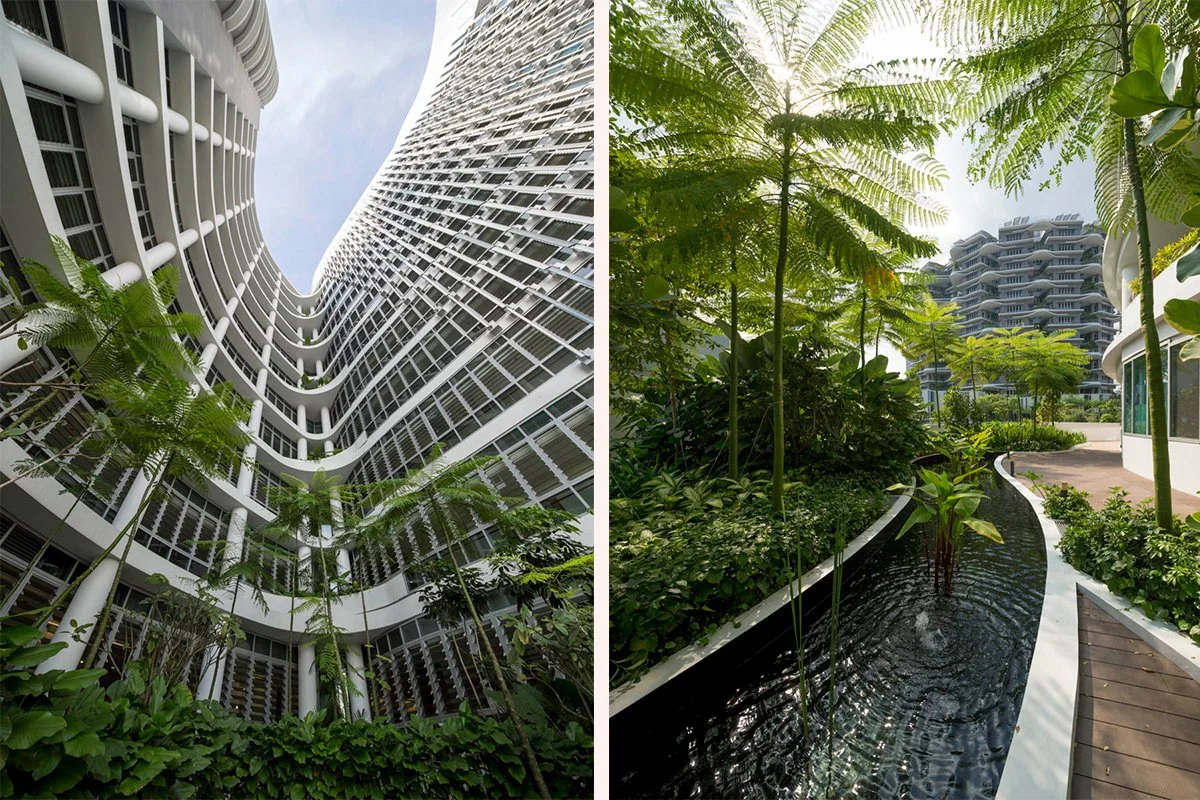
Biophilic design has been found to improve rates of recovery from illness- Ng Teng Fong General Hospital, Singapore. Architect : Studio505 / Himmelzimmer
Biophilic design essentially means bringing nature indoors through various architectural strategies. These can include internal courtyards, large windows, easy-to-operate doors, balconies overlooking greenery, or the use of natural materials.
Nature has profound healing properties that become increasingly valuable as we age. Integrating nature can transform institutional environments into healing spaces that promote wellbeing.
Some approaches include:
Internal courtyards and indoor atriums with expansive planting
Daylight combined with greenery to bring people closer to the outdoors
Green roofs and balconies integrated with buildings
Vertical gardens and living walls
These strategies can create both visual and tactile connections to nature.
Research consistently demonstrates that biophilic design delivers measurable improvements in wellbeing. Studies show enhanced mood and mental health, improved air quality through natural ventilation and plants, reduced stress levels, and increased motivation for physical activity. These effects also encourage greater social interaction and measurable pain reduction across multiple conditions.

Biophillic design has been found to improve rates of recovery from illness- Ng Teng Fong General Hospital, Singapore, Architect : Studio505 / Himmelzimmer
Spatial Design and Interior Design Catered to the Elderly
Spatial and interior design focused specifically on the end user—the retirement community—can create spaces that uplift and reinvent lives.
Thoughtful spatial organization can dramatically improve quality of life through careful attention to safety and functionality.
Safety and Navigation
Creating safe, navigable spaces requires:
Wide pathways with a minimum width of 1.5 meters for wheelchair access
Single-level flooring to minimize trip hazards
Furniture with rounded edges
High-contrast colours to identify doorways and steps
Spaces should be character-rich rather than monotonous, since memorable environments assist navigation for those with visual impairments or cognitive challenges.
Colours and Textures
Colour and material selection are critical. Bright colours help define individual spaces, while soft, pleasant materials improve comfort.
Wall and floor finishes should include:
Non-slip surfaces
Tactile indicators
Materials that aid movement through spaces
Memorable textures and colour schemes that assist orientation

The vibrant rainbow-striped façade of Nanyang Primary School by Studio505/Himmelzimmer demonstrates how the psychology of colour plays a huge role in how we feel, using bold, cheerful hues to create an uplifting and energizing environment that supports wellbeing. Location Singapore, Architects: Himmelzimmer
Early collaboration between architects and developers is key to ensuring that the original design concept is maintained throughout the project.
Lighting Strategy
Proper illumination becomes critical as vision declines with age.
Natural daylight should be maximized through strategic window placement and skylights. Artificial lighting must provide both:
Task lighting for activities like reading or cooking
Comfortable ambient lighting for communal areas
Maintaining circadian rhythms through exposure to natural light is crucial for healthy sleep patterns and overall wellbeing.
Community Spaces
Communal spaces play an important role in encouraging social interaction.
Effective community areas may include:
Multiple communal zones for different activities
Reading nooks
Game and recreation spaces
Integrated interior planting
Soft furnishings that define spaces while maintaining openness
Ergonomically designed movable furniture
Universal Design
Universal design focuses on accessibility, safety, usability, flexibility and intuitive use.
This approach incorporates adaptable design elements that accommodate changing physical abilities. For example, pull-down cupboards allow items to be brought within reach.
Other considerations include:
Strategic room adjacencies
Accessible door handles and controls
Accessible toilets and adaptable furniture
Accessible kitchens and bathrooms
Well-lit pathways and communal areas
Integrated seating throughout buildings
Accessible smart technologies
These strategies extend the life cycle of fixtures and fittings and enable people to remain in their homes longer.
The Positive Impact
When these three principles are thoughtfully integrated, the benefits extend far beyond basic accommodation.
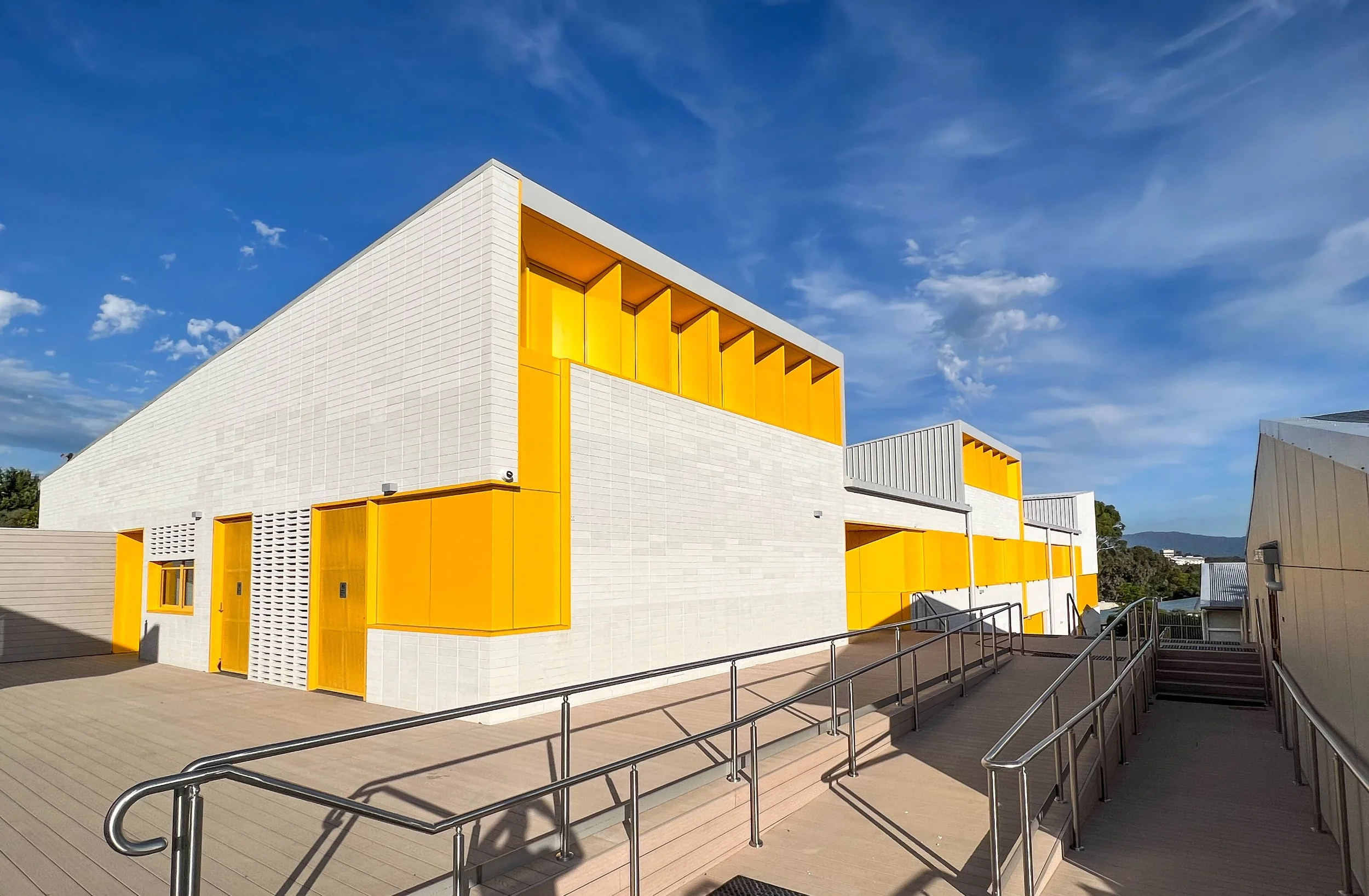
Universal design can encompass the elderly as well as the disabled in its capacity aid ciruclation and improve accesiblity of buildings. Norwood Secondary College accesible ramps. Architects : Himmelzimmer
Personal Empowerment
Well-designed environments enhance independence and allow individuals to maintain personal agency and choice. This creates opportunities for growth, learning, and participation in meaningful activities without relying heavily on assistance.
Enhanced independence also allows natural communities to form within these environments, supporting friendships and stronger social connections.
Health and Wellbeing
The health benefits of well-designed senior living environments are substantial.
Residents experience:
Improved physical health through biophilic design elements
Better sleep patterns through circadian lighting strategies
Increased mobility and physical activity
Improved cognitive stimulation through engaging environments
Well-designed communal spaces also strengthen social bonds and reduce isolation and loneliness.
Lifestyle Enhancement
Modern technologies can further enhance safety and independence.
Advanced monitoring systems can provide 24-hour oversight while remaining unobtrusive. Rapid emergency response systems can detect incidents quickly, and fall prevention technologies can provide protection without restricting movement.
These innovations provide peace of mind for both residents and their families.
Ultimately, these environments feel like chosen homes rather than institutional facilities. Residents gain confidence in accessing outdoor spaces, continuing hobbies, and maintaining dignity.
Conclusion
The dignity in senior living lies not in managing decline but in supporting continued flourishing.
By combining biophilic design principles, thoughtful spatial organization, and integrated technology, it is possible to create environments where aging becomes not something to endure but a new chapter to embrace.
The question is no longer whether society can afford to invest in dignified aging environments—it is whether it can afford not to.
With proper planning and implementation, the places where people grow old can become places they are genuinely excited to call home.
As we design for others, we are ultimately designing for ourselves and the communities we hope to join. The standards set today will define the quality of life for future generations of seniors.
References
Huntsman, D. D. and Bulaj, G. (2022). Healthy Dwelling: Design of Biophilic Interior Environments Fostering Self Care Practices for People Living with Migraines, Chronic Pain, and Depression. International Journal of Environmental Research and Public Health, 19(4), 2248. https://doi.org/10.3390/ijerph19042248
Pandita, D. and Choudhary, H. (2024). Biophilic designs: a solution for the psychological wellbeing and quality of life of older people. Working with Older People. https://doi.org/10.1108/WWOP-01-2024-0003
Fakhimi, M. M., Hughes, A. and Gustavson, A. M. (2025). Designing for Dignity: Empowering Life Through Synergistic and Integrated Design Solutions for Aging in Place. Available at: https://www.preprints.org/manuscript/202501.0500/v1/
AbilityNet. Technology for seniors. Available at: https://abilitynet.org.uk/factsheets/technology-seniors
Housing LIN. Smart Housing and Telecare - Provision - Older People. Available at: https://www.housinglin.org.uk/Topics/browse/HousingOlderPeople/OlderPeopleHousingProvision/Telecare/
Urbanist Architecture. Modern care home design. Available at: https://urbanistarchitecture.co.uk/modern-care-home-design/
Senior Home Plus. Green initiatives: Sustainable care home. Available at: https://www.seniorhomeplus.co.uk/blog/housing-for-elderly-people/green-initiatives-sustainable-care-home
Office for National Statistics. Future of an Ageing Population statistics by area. Available at: https://www.ons.gov.uk/visualisations/nesscontent/dvc325/small%20multiple%20maps/wrapper.html
Luo, Y., Yang, Y. and Li, Y. (2024). A systematic review of the impact of therapeutical biophilic design on health and wellbeing of patients and care providers in healthcare settings. Frontiers in Built Environment.
Joye, Y. and van den Bosch, K. A. (2021). Engagement with nature and the impact of biophilic design on health and wellbeing. Urban Forestry and Urban Greening, 59.
Kuznetsova, N., Petrov, A., Yashina, M. and Poluektova, M. (2021). Effects of biophilic design in office environments: A multisensory approach to human well-being. Building and Environment, 200.
RIBA Publishing (2011). Guide for Assisted Living: Towards LifeHome 21. London: RIBA Publishing.
Kellert, S. R., Heerwagen, J. and Mador, M. (2008). Biophilic Design: The Theory, Science and Practice of Bringing Buildings to Life. Hoboken: Wiley.
United Nations Department of Economic and Social Affairs (2020). World Population Ageing 2020 Highlights. New York: United Nations.