
10 Tech Solutions That Improve Elderly Wellbeing In Senior Living
In the UK and Australia we live in an ageing society with the older generation as a percentage of the population steadily increasing. There has been a 47% increase in the number of people aged 50 and over in the last 40 years according to the Centre for Ageing Better. It would be statistically unfeasible for the elderly to completely rely on the younger population for support to help with this imbalance, as the numbers suggest.
Thankfully with skyrocketing growth of AI, smart homes, sensor devices and the internet of things, this challenge is being met with various technological solutions that focus especially in improving the health and wellbeing for the elderly. People in retirement age want to age better and live fuller lives and expect their environments to aid them in doing so. Most seniors recognise that they are on a journey of mental and physical change and also acknowledge the increasing time for enjoying the good moments in life. Most like to engage in creative and physical pursuits. Maintaining physical agility is a key factor for good senior living as well as overall health.
In the era of the smart home, there is a lot of information out there on products that are now on the market.
As an architecture studio, we at Himmelzimmer are always on the lookout for the latest technology that we can incorporate into our designs. We narrowed down our research to summarise ten technological solutions that are either on the market or being developed with prototypes. These products help create a lived experience that goes beyond expectations for an expansive life in old age, from simple smart devices to items that need specialist installation. Here is a list of ten devices that can bring about improvement in the care home and retirement living sector.

Technology is transforming what is possible in retirement living through AI, Virtual reality and smart systems revolutionizing ageing in place.
1. Smart Floors
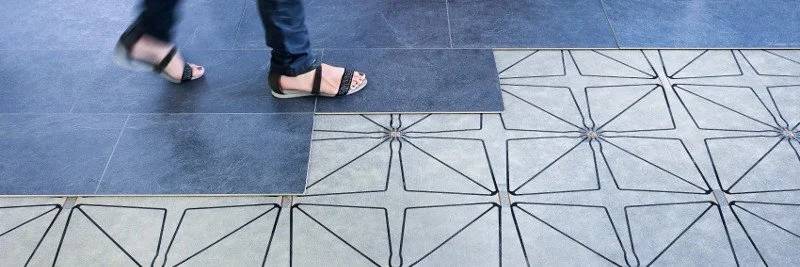
Smart floors are laid as an underlayment and enables detection of pressure and movement image credit: © SensFloor by Future-Shape
According to the Centre for Ageing Better approximately one in three people aged 65 and over, and half of those over 80, will experience at least one fall each year. This is a significant figure and prevention is key. Smart floors address this issue. Using a similar touch sensitive interface as an iPad, smart floors can monitor an individual's position relative to the floor and their movement. It is linked to alarms that can alert carers when a fall is likely to happen or has happened.
It can also monitor patterns of movement giving data to inform carers of potential reduction in movement of the user. Nanomade, Future-Shape and Alerta are some of the current suppliers of this product.
Smart floors replace conventional underlayment during standard construction, transforming ordinary flooring into intelligent monitoring systems that function like tablet touchscreens. The technology continuously detects pressure, movement, and location data through residents' natural daily activities, streaming this information to cloud-based systems for analysis.
The system provides real-time alerts to care staff during falls or irregular movement patterns whilst generating long-term health insights for proactive interventions. Beyond healthcare applications, smart floors deliver valuable building management data including space utilisation, traffic patterns, and maintenance requirements.
2. Smart Door Locks
Forgetting one's keys is a concern for anyone but for the elderly this is more common. Smart door locks with biometric detection for the elderly can eliminate the stress of wondering if the door is locked, the user can check the status remotely on their phone or smartwatch, and some models even auto-lock after a set time. These can be programmed to work with thumbprints as well as codes. The keyless entry is a significant benefit since there's no more worrying about lost keys; instead, you can get in with a code, your phone, or even just your fingerprint. For families and carers, it is very convenient.
For dementia patients, biometric locks reduce confusion and frustration associated with remembering codes or carrying keys. The technology allows authorized access while preventing wandering, a serious safety concern in dementia care. Caregivers benefit from streamlined access management, as they can quickly enter resident rooms during emergencies.

A biometric door lock being used to open a door. Loosing your keys should not have to be a problem if biometric door keys are fitted.
3. Virtual Reality Headsets
Innovation should lift everyone up. Virtual reality is doing exactly that, giving seniors the chance to explore new worlds without leaving their living rooms. VR is proving itself as a real tool for cognitive health and not a passing fad. One can experience virtual tours that sharpen memory and problem-solving skills, which keeps minds active and engaged. You can 'travel' to places they have always dreamed of visiting, and this encourages their brains to 'light up' in ways that benefit their overall wellbeing.
The social element matters just as much. VR creates shared experiences that help seniors connect with others, building confidence and forming new relationships. In a world where loneliness among older adults is a serious health concern, these virtual connections offer genuine hope.
Perhaps most importantly, VR is revolutionising physical rehabilitation. Seniors recovering from strokes or spinal injuries can practice everyday tasks, like cooking in a virtual kitchen, in a safe, controlled environment.
4. Smart Fridges
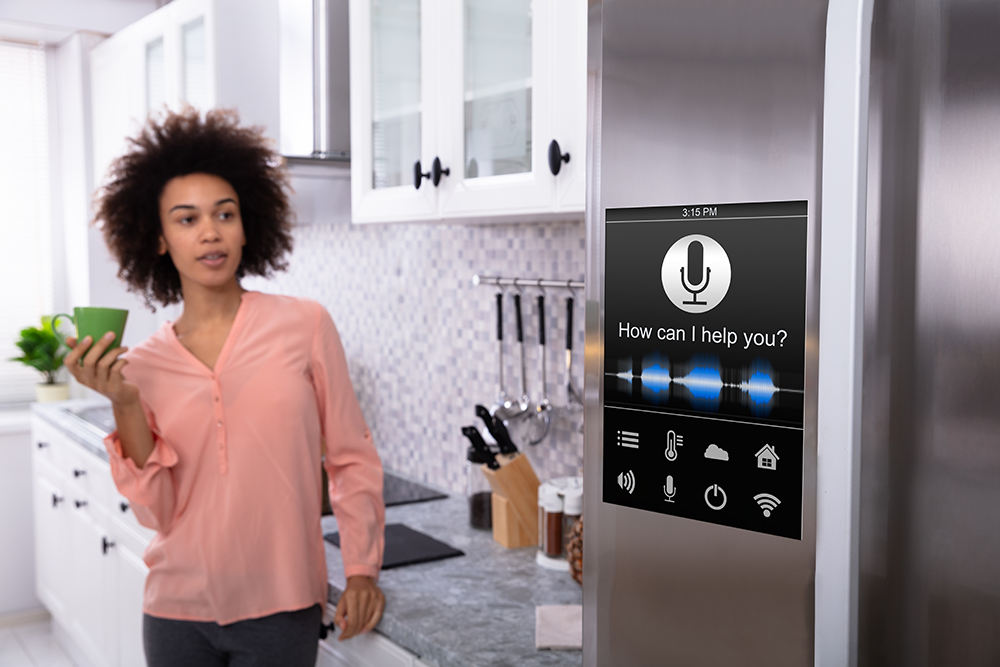
Smart fridges can keep track of food items and
manage orders all with the use of one’s voice
Smart refrigerators can significantly benefit older adults by enhancing their independence, safety, and convenience in the kitchen. Features like remote monitoring, food management tools, and voice-activated controls can make daily tasks easier and reduce reliance on external assistance. Currently Samsung's Family Hub smart fridge range has a built-in camera that keeps track of food and displays it. Keeping track of food supplies is made simple with this design and can be a great help with shopping for essential food items for elders with memory impairment and prevent spoiled foods from being consumed by accident.
5. Walking Assistant Robots
Walking and general mobility decreases as we age. To assist with this there have been prototypes of robotic walking assistants developed in the last decade. For example, researchers at Chung-Ang University in South Korea have developed a wearable robot that focuses on the frontal plane (lateral movements) rather than just forward motion, recognising that walking is inherently a three-dimensional activity requiring support across multiple planes.
The robot works by assisting the hip abduction muscles during the recovery phase of walking, when the body's centre of mass naturally shifts side to side to maintain balance, essentially replacing part of the physical effort humans normally expend.
This technology could benefit older adults, patients recovering from leg or hip surgeries, and anyone experiencing walking difficulties due to ageing, muscle weakness, or specific medical conditions, offering new possibilities for both rehabilitation and everyday use. While research continues to explore how lateral assistance affects walking balance, companies like Hypershell are already bringing exoskeleton technology to market, showing that wearable walking assistance is moving from laboratory innovation to real-world application.
6. AI Powered Care Robots
Feeling isolated and lonely is a common problem faced by retirees. Carers are there to help and provide social interaction. However, carer burnout is a real concern in our post-covid world with 79% of carers experiencing anxiety and stress in the UK (Care UK, 2023) due to the heavy load of work. In countries such as China, South Korea and Germany, AI powered robots helping the elderly in care home settings is already a reality.
China is leading a Carebot revolution that's transforming how we think about elder care, with cities like Shanghai and Xi'An launching comprehensive smart elderly care initiatives. These AI powered robots are doing everything from feeding and bathing assistance to fall detection and mobility support, making life easier for both seniors and their families.
A company called Blue Frog together with Huawei Health has also introduced a Carebot "Buddy" that tries to establish an encouraging relationship with seniors through voice. It monitors the vital signs of the user through wearables such as smart watches and informs the user, for example, if the heart rate is up. It can do automated reminders for taking medicine, medical appointments and daily activities and it is equipped with sensors that can sense falls and levels of interaction. It can also alert caregivers when an issue is detected.
7. Smart Speakers That Enable Smart Homes
For retirement living, automating activities has become easier with smart speakers or voice assistants. Smart speakers are now connecting us with our apps and with our contacts, thereby reducing loneliness and isolation. It is also making repetitive tasks like shopping, opening curtains and blinds easier. These voice-activated speakers provide hands-free control over household functions, from adjusting lights to managing thermostats, creating an environment where mobility challenges no longer limit independence, while also serving as vigilant medication reminders that ensure health routines are maintained with the precision of a well-orchestrated ecosystem.
These devices bridge the gap between isolation and community, enabling easy communication with loved ones through calls and video chats, while offering entertainment and cognitive stimulation that keeps minds active.
Currently Amazon Echo, Apple Homepod and Google Nest Audio seem to be leading the pack in terms of smart speaker technology. Coupled with smart devices like smart LED lights, smart dishwashers and cookers, smart doorbells, smart sensors and cameras, safety and efficiency is being maximised in the care sector and will only continue to grow.
8. One Button Computers
As cognitive ability changes with age, the elderly can feel overwhelmed by the complexity of technology. To overcome this issue, multiple devices have come to the market. One such device is KOPM: a one button computer for seniors. It is similar to an iPad but has a touch sensitive screen that helps to easily connect with others. It features a large screen and just one button making it very accessible to all.
9. Robotic Arm Cooking
Cooking involves shopping for ingredients and washing and preparing food. This can be a daily challenge for the elderly. Robotic arms that are consumer-oriented have been around since 2010. Chains like White Castle and Chipotle began testing robotic arms in kitchens. Collaborative robotics (cobots) are designed to work safely alongside humans in kitchens. AI is being integrated so that robots can learn new recipes and cook more precisely. Although it can make the cooking process easier and more efficient, the technology is new and is still being developed to make it safe. We do believe that this will become commonplace especially in the retirement living sector.
10. Smart Wearables
Smart wearables can be life-savers for elders in care homes and retirement living communities. These small devices help monitor vital signs, track movement, and even detect falls, giving families and caregivers peace of mind and allowing our seniors to live with greater independence and dignity. We've always believed in the power of community and innovation coming together, and smart wearables are a powerful example of that. They don't just offer data, they offer connection, safety, and a sense of empowerment for those who've spent their lives taking care of us. Some notable devices include Apple Watch Series, Fitbit Sense and UnaliWear Kanega Watch.
Conclusion
One truth in life that we must all face is the inevitability of ageing and the physical, cognitive and social challenges that bring with it. These smart, AI enabled technological advancements will reduce the possibility of a society divided between the young and the old and bring more social cohesion leading to better lived lives for all.
These digital innovations will innovate and empower, and will not replace human interactions, but improve or facilitate them. The construction industry now can embrace this innovative technology to transform retirement living and care facilities into environments residents can genuinely anticipate with confidence.
References
1. AbilityNet (no date) Technology for Seniors. Available at: https://abilitynet.org.uk/factsheets/technology-seniors (Accessed: 4 July 2025).
2. Ageing Better (no date) Ageing Population. Available at: https://ageing-better.org.uk/ageing-population (Accessed: 4 July 2025).
3. Blue Frog Robotics (no date) Buddy: An Innovative Solution for Assisting Seniors at Home and in Care Facilities. Available at: https://www.bluefrogrobotics.com/buddy-an-innovative-solution-for-assisting-seniors-at-home-and-in-care-facilities (Accessed: 4 July 2025).
4. Centers for Disease Control and Prevention (no date) Facts About Falls. Available at: https://www.cdc.gov/falls/data-research/facts-stats/index.html (Accessed: 4 July 2025).
5. Citizen55 (no date) How Smart Technology & AI Are Revolutionizing Senior Living Communities. Available at: https://citizen55.com/how-smart-technology-ai-are-revolutionizing-senior-living-communities/ (Accessed: 4 July 2025).
6. Global Times (2025) China's Population Aging Challenge and Opportunities. Global Times, 3 May. Available at: https://www.globaltimes.cn/page/202503/1330063.shtml (Accessed: 4 July 2025).
7. Honda (2008) Honda Develops New Assist Devices to Help People with Walking Difficulties. Honda Global, 7 November. Available at: https://global.honda/en/newsroom/news/2008/c081107-eng.html (Accessed: 4 July 2025).