
How to make your home smarter for ageing in place
The 2026 Wellness Tech Guide
From mirrors that can check your heart rate while helping you exercise better, to chore robots and vein recognition door locks that stay perpetually charged through infrared lasers, the future of smart accessible homes continues to leap ahead with new innovations in 2026.
These technologies are helping to revolutionise how we stay independent as populations age and live for longer, especially in the UK.
Little by little, the concept of the home as a care provider is becoming a reality around the world, where the demand for care and accessible living has become increasingly expensive. As a result, homes themselves are becoming health partners through new technologies that can be built into the fabric of your home.
Assistive living technology, which was originally based around the medical market, is now looking beyond simply providing risk mitigation. Smart home products and systems are becoming increasingly available, and users are beginning to experience the benefits.
We have compiled a list of products that seem to be having their moment in 2026. Some are yet to enter the market as they are passing regulatory approvals in the UK but have become available in places such as China and Singapore.
As with any product, the selection and safe use of technology remains the responsibility of the consumer, and we recommend doing your research before purchasing any of the products listed here.

These pendant lights adjusts the colour temperature of the light to mimic natural daylight. Image courtesy of Niche.
The AI wellness mirror
Wellness is a growing area of interest for people as they age. We all want to live longer and better, particularly as we approach retirement and beyond.
Smart mirrors combine AI, sensors and cameras to create a wellness profile for the person standing in front of them. They combine facial blood flow data and skin temperature information to create this profile.
Users can track trends in their heart health and daily stress level fluctuations. They can understand when they may need extra time for activities such as yoga or swimming when stress indicators suggest a need for intervention.
The technology can also provide insights into whether a current diet or lifestyle routine is having a positive impact. This health check, completed in front of the mirror, becomes integrated into an everyday routine.
The bathroom, traditionally one of the most common locations for falls, can become a hub of daily health intelligence through smart mirrors.
Another type of smart mirror is also becoming increasingly popular. These incorporate smart speakers such as Alexa, allowing hands-free control of music, heating and lighting from the same surface.
AI powered smart gym
Another evolution of the smart mirror is the AI-powered smart gym, which can monitor workouts and provide real-time feedback.
These home multi-gyms use smart mirrors, video guidance and AI technology to provide advice on posture and movement, correcting users in real time.
Some systems allow users to track trends over weeks and months, providing an overview of their health journey and progress.
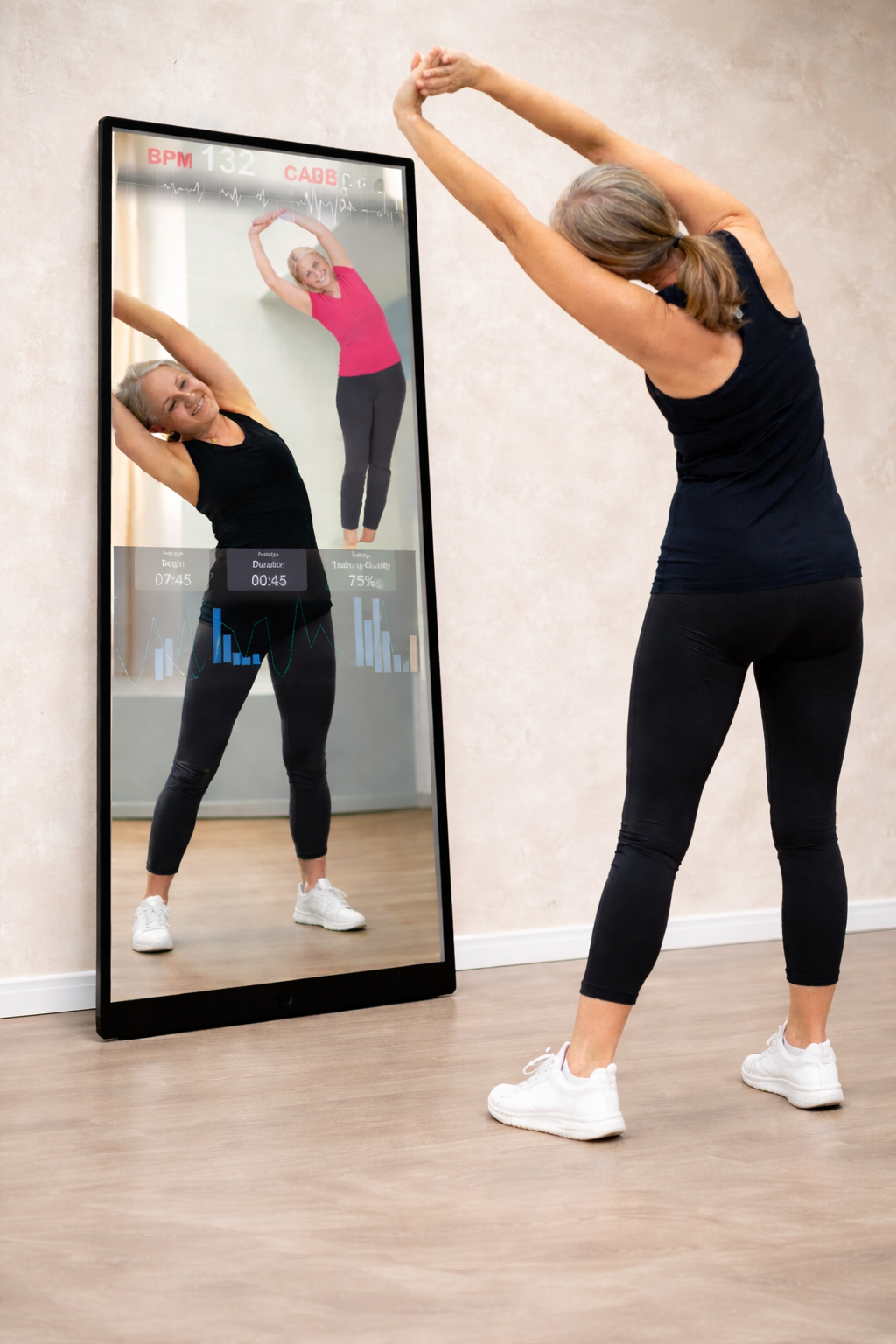
The AI smart gym lets you track your movements and your health with AI technology.
Mobility and accessibility
The newest technology entering keyless home access is vein recognition technology, allowing users to unlock doors by simply presenting their hand.
An example is vein recognition smart door lock technology, which could have significant applications in homes adapted for dementia support and wheelchair users.
Stairlift developments
Stairs are a common challenge as people age and mobility declines.
Stairlifts have become popular in recent years, however they are not suitable or desirable for everyone. Less intrusive standing stairlifts are becoming a popular alternative, although they require a higher level of mobility.
Compact stairlifts can now be fitted to existing staircases for people who remain relatively agile but experience difficulty with bending or standing.
New standing stairlift designs are being developed to integrate more naturally into existing homes.
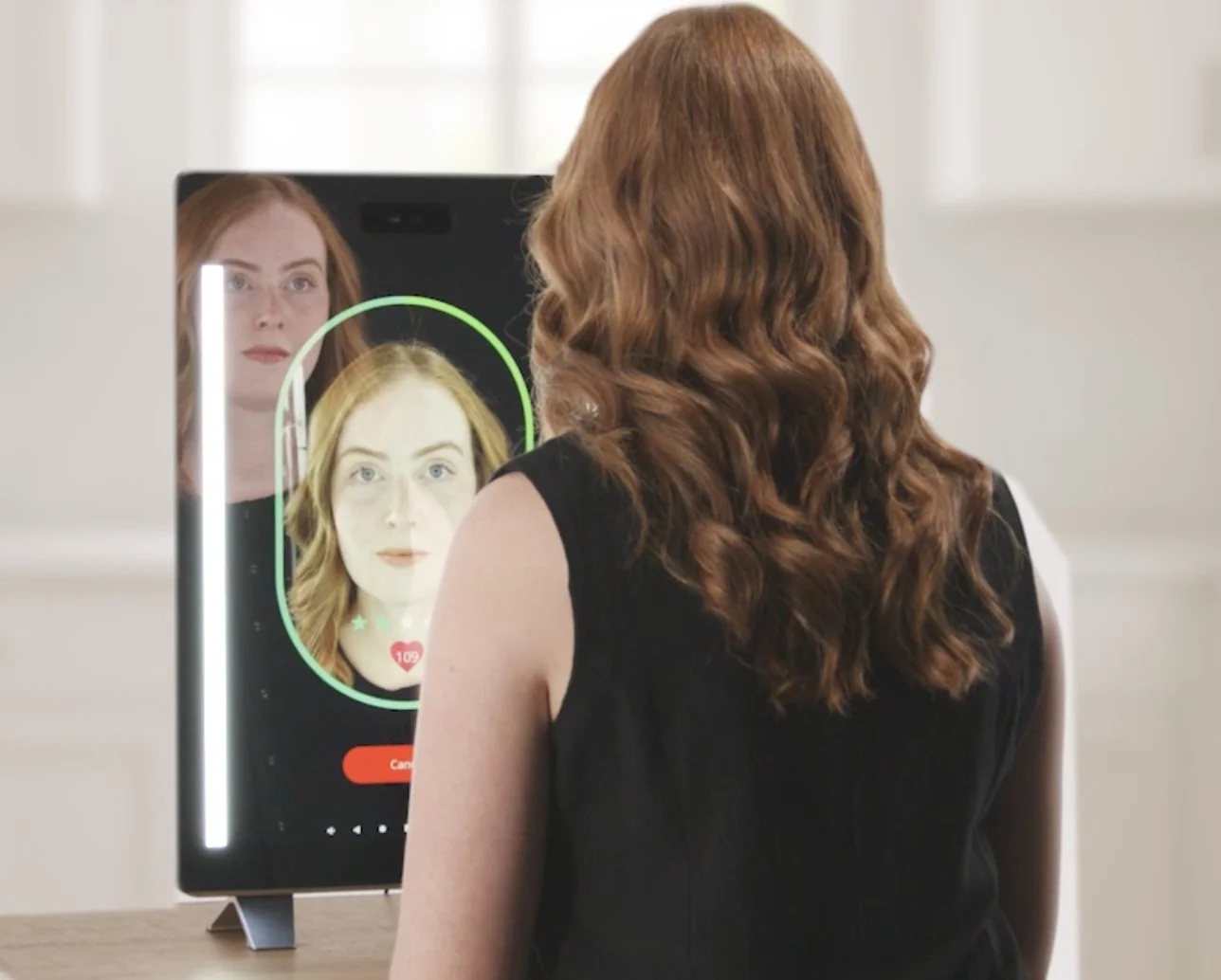
Smart Mirrors combines AI, sensors and cameras to create a wellness profile
for the person standing in front of it. . Source: NuraLogix Corporation
Smart wheelchairs and independent living
Smart wheelchairs paired with compact stairlift technologies could have a significant impact on adapting existing homes for the future.
There have also been improvements in self-powered wheelchairs capable of navigating steps and stairs.
The availability of these technologies in different markets will continue to develop as demand increases.
Home safety and environment
Water sensors for preventing leaks
Accident prevention in independent living has changed significantly with the introduction of AI-enabled home monitoring.
Water leaks are a common household concern, but smart water sensors can now detect leaks and automatically stop water supply before significant damage occurs.
Devices such as smart water monitors provide reassurance by identifying problems early and helping prevent costly repairs.
Although this may seem like a small improvement, the psychological benefits of reducing worry and increasing confidence at home are significant.
Lighting that adjusts to daylight
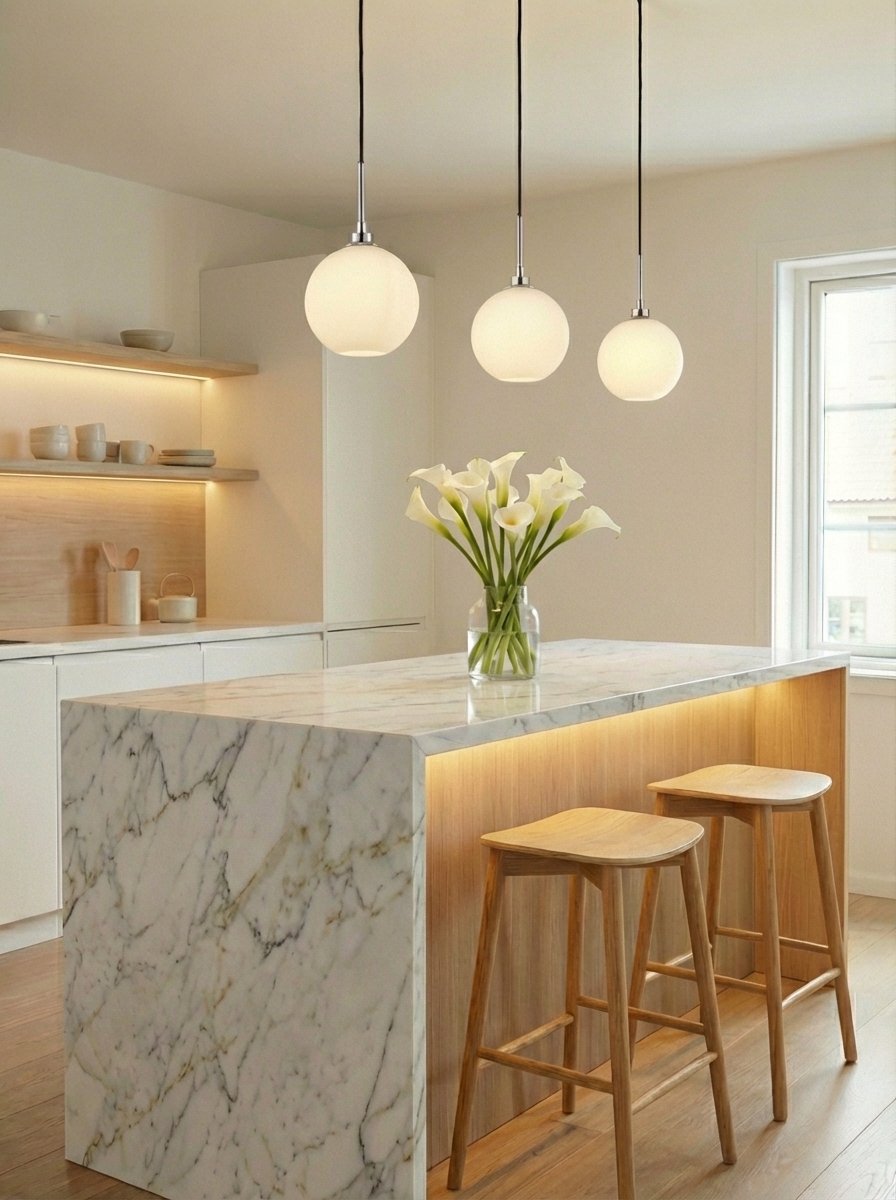
Niche lighting systems uses circadian lighting, which adjusts to the colour temperature to the time of day. Images courtesy of Niche.
Circadian lighting has developed significantly, with advanced systems now adjusting colour temperature throughout the day to mimic natural daylight.
These systems provide high-quality tuneable lighting that goes beyond traditional dimmable bulbs and colour-changing LEDs.
Lighting can also connect with shading systems such as blinds, allowing homes to optimise natural and artificial light through smart controls.
Benefits often associated with circadian lighting include:
improved sleep quality
better sleep-wake cycles
more consistent energy levels
improved wellbeing
enhanced cognitive function
These factors all contribute to supporting healthier ageing at home.
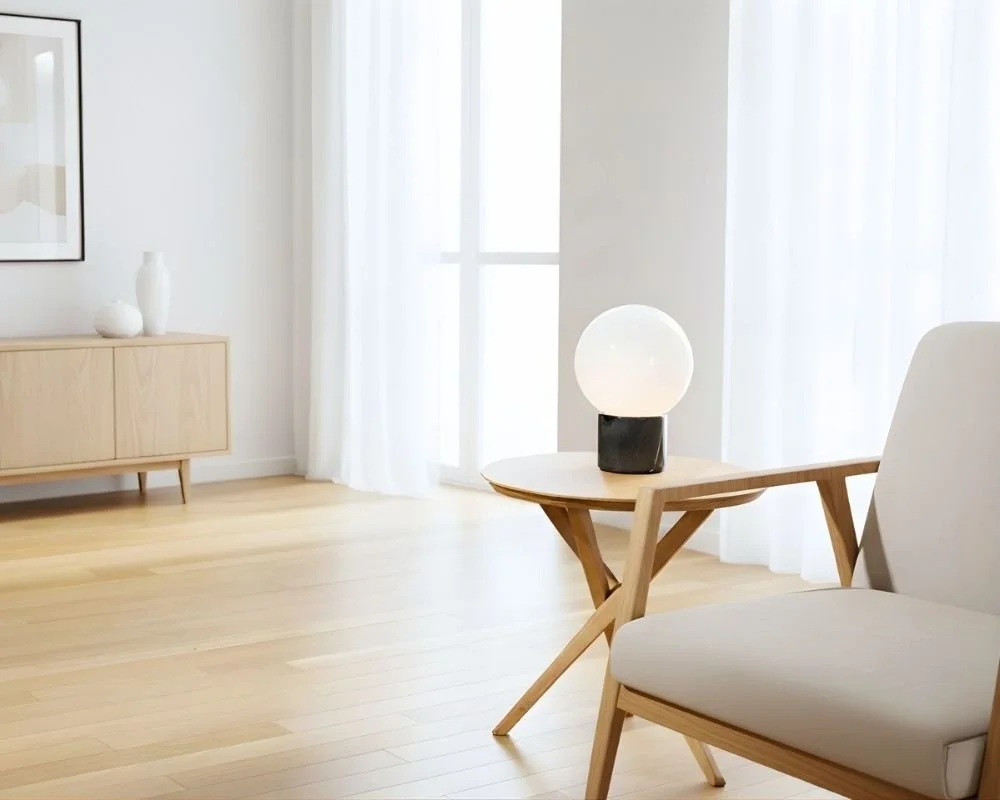
Lutron X Niche Table lamps. Images courtesy of Niche.
Accessible bathroom design advancements
Wellness has its roots in hygiene, and bathrooms are evolving into highly accessible environments.
Hands-free smart toilets are becoming increasingly advanced, offering features such as:
chair-height seating
automated cleaning
improved hygiene
reduced maintenance requirements
touch-free controls
These technologies can support greater independence and comfort within the home.
Robotics and domestic assistance
Chore robots
Domestic robots are becoming increasingly sophisticated, with companies developing technology aimed at creating more automated homes.
Household robots are being designed to perform everyday tasks, helping make home management more efficient and intuitive.
Advanced robotic systems use articulated arms, sensors, cameras and AI-powered navigation to complete tasks that traditionally required human assistance.
Potential uses include:
laundry
washing dishes
meal preparation
household organisation
Some robots are also designed to support communication and interaction through built-in memory, speakers and sensors.
Companion robots
Not all robots are designed for physical tasks.
Companion robots are being developed to help older adults stay connected, organise daily activities, share information and support social interaction.
These technologies may help address challenges associated with loneliness and the increasing demand for carers.
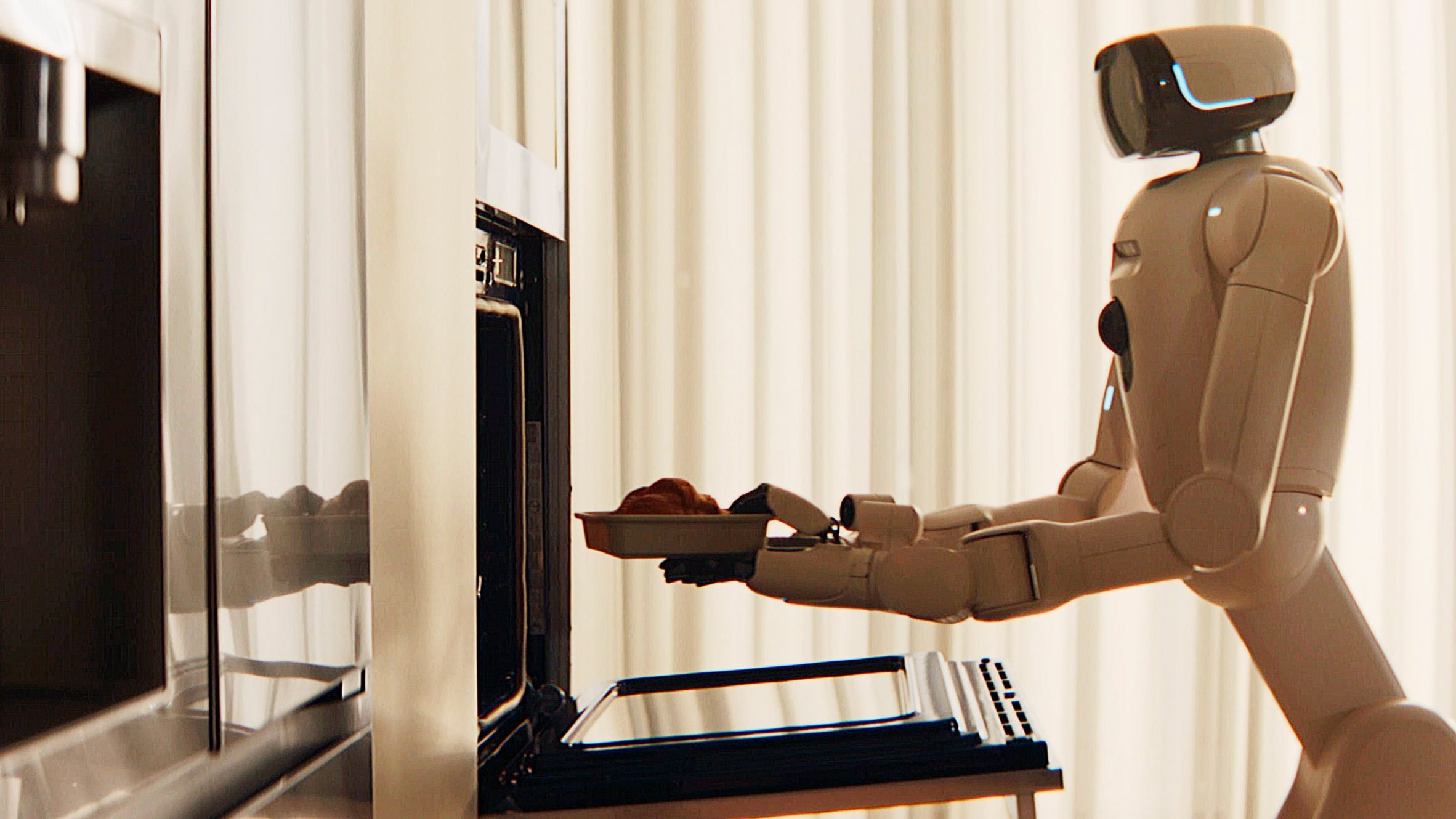
A zero labour home would involve chore robots like this one ; the LG CLOiD representing LG’s latest robot household automation that is optimized for todays living environments. Image courtesy of LG Electronics
Key considerations
With the advancement of AI in recent years, technology-enabled products are rapidly transforming.
AI-powered accessibility is creating a new direction where products can learn from users, respond to voice commands and provide greater support with everyday tasks.
Gesture recognition is another area improving accessibility by supporting people with different abilities.
The products highlighted here represent only some of the technologies transforming mobility, independence and daily living.
AI tools are increasingly helping people navigate unfamiliar environments, read signs and identify objects without assistance.
However, accessibility technologies remain largely luxury products, and wider availability will be needed as demand increases.
As products become more intelligent, they also become increasingly dependent on smart technology. Ensuring these systems remain accessible and easy to use for older populations will be an important consideration.
Robotics may provide valuable support, but technology should continue to complement human care rather than replace human connection.
References
AL-SUS Technologies (no date) AL-SUS Step Lift. AL-SUS Technologies Pte Ltd, Singapore. Available at: https://www.al-sustech.com.sg/al-sus-step-lift/ (Accessed: 13 April 2026).
ElliQ (no date) The companion robot for aging loved ones. Intuition Robotics. Available at: https://elliq.com/ (Accessed: 13 April 2026).
Flume Water (no date) Flume 2 Smart Home Water Monitor and leak detector. Available at: https://flumewater.com/product/ (Accessed: 13 April 2026).
GROHE (no date) GROHE Sense Guard: Smart water controller. Available at: https://www.grohe.us/smarthome/sense-guard (Accessed: 13 April 2026).
HomeServe Labs (2019) New report reveals that over 40% of domestic properties have water leaks. Property Reporter, 14 March. Available at: https://www.propertyreporter.co.uk/at-home/new-report-reveals-that-over-40-of-domestic-properties-have-water-leaks.html (Accessed: 13 April 2026).
Intuition Robotics (no date) ElliQ: The AI care companion robot for older adults. Available at: https://www.intuitionrobotics.com/ (Accessed: 13 April 2026).
KOHLER (no date) Veil™ one-piece compact elongated smart toilet, dual-flush (K-5401-PA). Available at: https://www.kohler.com (Accessed: 13 April 2026).
LG Electronics (2025) LG to unveil home robot at CES 2026, sharing vision for the Zero Labor Home. LG Newsroom, 25 December. Available at: https://www.lg.com/global/newsroom/news/home-appliance-and-air-solution/lg-to-unveil-home-robot-at-ces-2026-sharing-vision-for-the-zero/ (Accessed: 13 April 2026).
LG Electronics (2026) LG Electronics presents LG CLOiD home robot to demonstrate “Zero Labor Home” at CES 2026. LG Newsroom, 4 January. Available at: https://www.lg.com/global/newsroom/news/home-appliance-solution/lg-electronics-presents-lg-cloid-home-robot-to-demonstrate-zero-labor-home-at-ces-2026/ (Accessed: 13 April 2026).
Lockin (no date) The world’s no.1 vein recognition smart lock brand. Available at: https://lockin.com/ (Accessed: 13 April 2026).
Lockin (2025) Lockin Veno Pro CES 2025: First touchless video smart lock with palm vein recognition. Lockin Blog, January. Available at: https://lockin.com/blogs/articles/lockin-veno-7-pro-ces-2025-first-touchless-video-smart-lock-with-palm-vein-recognition (Accessed: 13 April 2026).
Lutron Electronics (no date) Ketra lighting. Available at: https://www.lutron.com/us/en/lighting/ketra (Accessed: 13 April 2026).
Lutron Electronics (no date) Ketra lighting FAQs. Available at: https://www.lutron.com/us/en/lighting/ketra/faq (Accessed: 13 April 2026).
New York State Office for the Aging (NYSOFA) (2023) NYSOFA’s rollout of AI companion robot ElliQ shows 95% reduction in loneliness. aging.ny.gov, 1 August. Available at: https://aging.ny.gov/news/nysofas-rollout-ai-companion-robot-elliq-shows-95-reduction-loneliness (Accessed: 13 April 2026).
SwitchBot (2026) SwitchBot unveils humanoid robot Onero H1 to handle household chores. Interesting Engineering, 7 January. Available at: https://interestingengineering.com/ai-robotics/switchbot-robot-butler-unveiledces2026 (Accessed: 13 April 2026).
SwitchBot (2026) Switchbot came to CES with a laundry robot you might actually be able to buy. Engadget, 7 January. Available at: https://www.engadget.com/home/smart-home/switchbot-came-to-ces-with-a-laundry-robot-you-might-actually-be-able-to-buy-153000025.html (Accessed: 13 April 2026).