
Designing Homes for Ageing in Place: How Architecture and Home Care Work Together to Support Independent Living
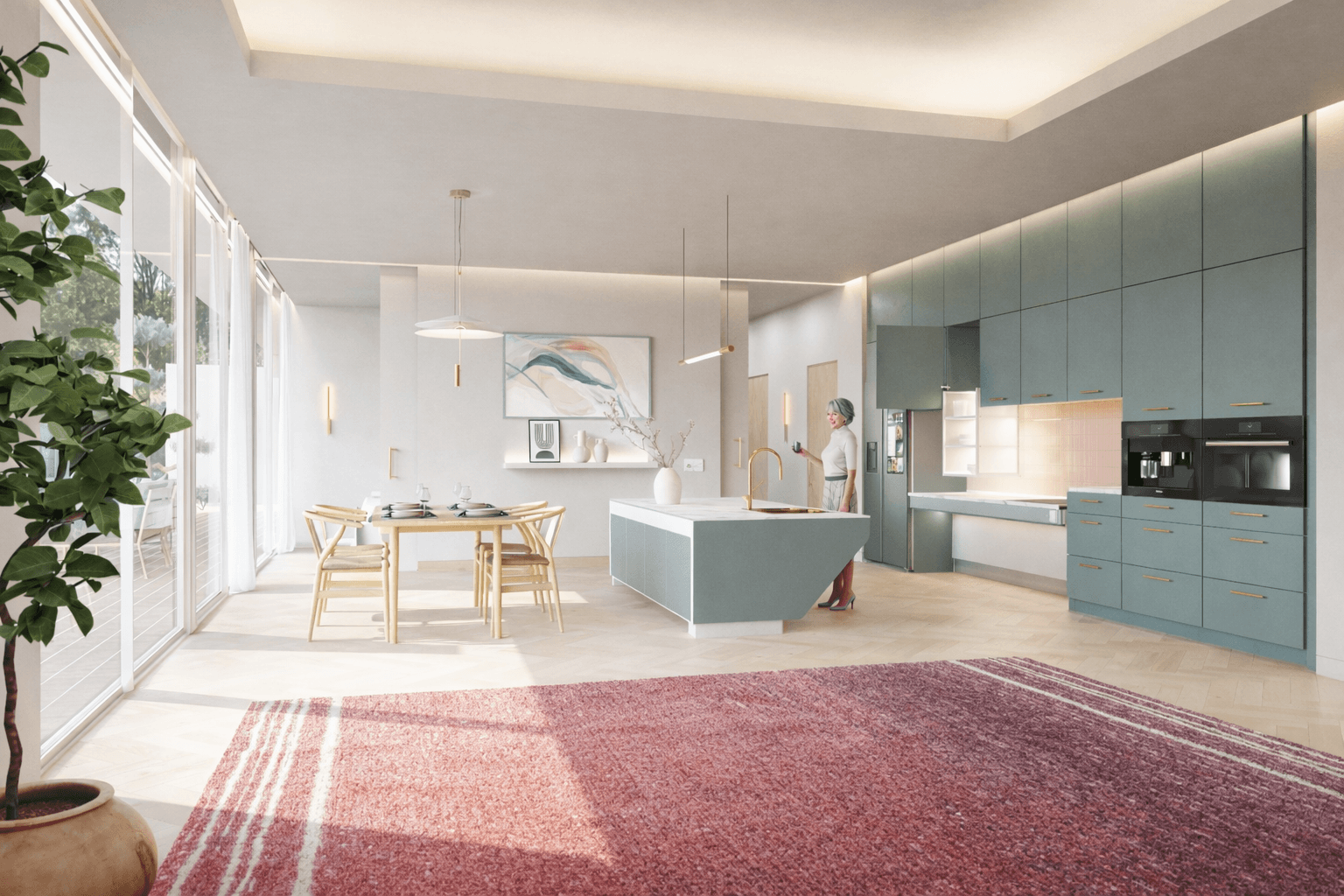
Age-friendly kitchen in an adapted home - designed with height-adjustable counters, pull-down shelves, anti-glare lighting, and anti-slip flooring to support safety, comfort, and independence. Designed by Himmelzimmer
To explore how home adaptations and home care can work together to support independent living, Himmelzimmer UK spoke to Vicky Haines, Managing Director of Kingsway Care, the leading independent homecare provider in Brighton & Hove, about home care and the role that thoughtful home design can play in helping people remain connected to the homes they love.
Homes are where memories are made
For most people, the home is where routines are built, memories accumulate and personal identity takes shape. It is the familiar kitchen where the morning begins, the comfortable chair in the same corner, the neighbours who know your name, the view from the window that has been part of everyday life for decades.
These details help people maintain their sense of identity, which is closely tied to the homes they live in.
Yet as people age, develop health conditions or experience changes in mobility, many face a difficult question: can they continue living safely and comfortably in the place they call home?
“Your home is your place of safety, not only because of what is inside it, but because of the geography around you. Familiarity with your surroundings allows people to feel anchored, grounded and emotionally secure.”
Ageing in place—the ability to remain in your own home as you grow older—is becoming an increasingly important conversation. But it requires a shift in thinking. A home should not only be designed for the person someone is today; it should also support the person they may become in the future.
As Vicky Haines explained, "Most UK homes, and often our wider approach to care, are reactive: stairlifts are installed after falls, grab rails are added after hospital discharge, beds are moved downstairs after mobility declines."
This reactive approach can reduce choices. A home that once worked perfectly can suddenly become difficult to navigate because of narrow doorways, multiple levels, small bathrooms or limited space for equipment. A more proactive approach is to design homes that can adapt and be reconfigured gradually alongside the people living in them.
This means considering not only how someone lives today, but how the home can continue supporting them if their mobility, eyesight or care needs change.
Types of care available

Home care can enable one to stay in the same home and neighbourhood and maintain one’s independence.
Home care differs from live-in care in the frequency and duration of visits. Home care, or domiciliary care, comes in the form of short or extended visits, with support provided through personal care, medication management, meal preparation, mobility assistance and companionship. Live-in carers remain within the home.
The other option available is care homes, which benefit those who are no longer able to keep themselves safe, or who have highly complex clinical needs and require specialist equipment.
Most clients prefer the home care option, as it feels safer. They can continue engaging in daily routines and the local community, remain close to friends and retain confidence.
Home care has the added benefit of allowing people to remain in the comfort and familiarity of their own home.
Architecture as part of the care solution
A home is not just the place where care happens. The design of the home directly influences how care can be delivered. For care providers, a well-designed home can make daily support safer, easier and more dignified.
Consider the difference between a traditional bathroom and an accessible one. A small bathroom with a bath, limited turning space and slippery surfaces can make personal care challenging for both the resident and the carer.
A thoughtfully designed bathroom with a level-access shower, non-slip flooring, seating and enough circulation space allows carers to provide support safely while helping the individual maintain independence.
Similarly, wider doorways and better circulation spaces allow easier movement with walking aids, wheelchairs or mobility equipment. These changes are not only practical—they can reduce physical strain on carers and create a safer working environment.
As Vicky explained, "A thoughtfully designed home can therefore improve safety, dignity and wellbeing for everyone involved in the caring relationship."
Good ageing-in-place design supports both sides of the care relationship—the person receiving support and the person providing it.
Designing homes that adapt as needs change
Ageing-in-place design is not about making a home feel medical or institutional. In fact, the most successful adaptations are often the ones that are barely noticed.
"The best accessible design is often invisible until it becomes necessary," Vicky explained, adding that it was important to "preserve dignity while allowing homes to adapt naturally as needs change."
A future-ready home might include wider doorways for improved accessibility, accessible bathrooms, level-access entrances, flexible ground-floor spaces, reinforced walls for future grab rails, adaptable kitchens and smart home technology.
For example, a spare room or flexible living area could later become a ground-floor bedroom or a space for care support. A bathroom designed with future accessibility in mind can avoid disruptive renovation later.
The goal is not to design around disability. It is to create homes that can respond to life's changes and make one resilient to them as much as possible.
Supporting carers through better design
Thoughtful home design does not only benefit the person living there. For family members and professional carers, the physical environment shapes every aspect of the support they can provide.
The benefits of ageing-in-place architecture extend beyond the homeowner. Family members and professional carers often work within the constraints of existing buildings. Poor layouts can make everyday tasks more difficult and increase physical demands. A cramped bedroom may make transfers harder. A narrow hallway may restrict mobility support. A lack of storage may make equipment difficult to manage.
By contrast, thoughtful design creates better conditions for care. Examples include:
Enough space around beds for safe assistance
Accessible bathrooms close to bedrooms
Clear routes through the home
Dedicated storage for mobility equipment
Spaces where carers can work comfortably
For live-in care, the home also needs to support another person being present. Flexible layouts, additional bedrooms and appropriate facilities can make long-term care arrangements more sustainable.
Good design does not replace human care—it allows carers to focus more on what matters: companionship, reassurance and supporting independence.
Home care and ageing-in-place architecture
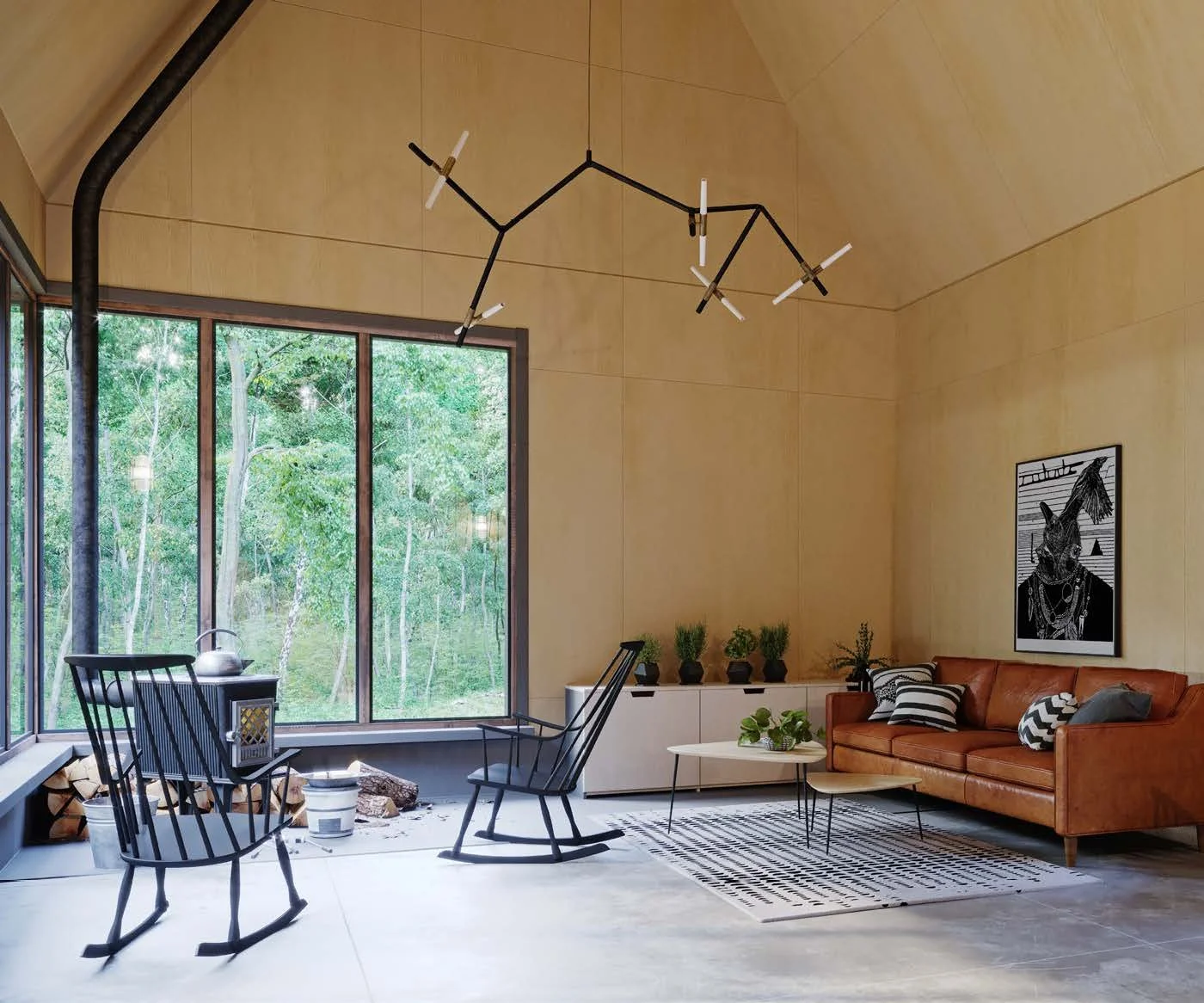
A well designed adapted home can aid the occupants as well as carers
Technology will also play an increasing role in helping people remain independent at home. Solutions such as fall detection, smart lighting, medication reminders, remote monitoring, automated heating and voice-controlled systems can provide additional reassurance while allowing people to maintain control over their everyday lives.
However, technology alone is not the only answer. A home should still feel like a home.
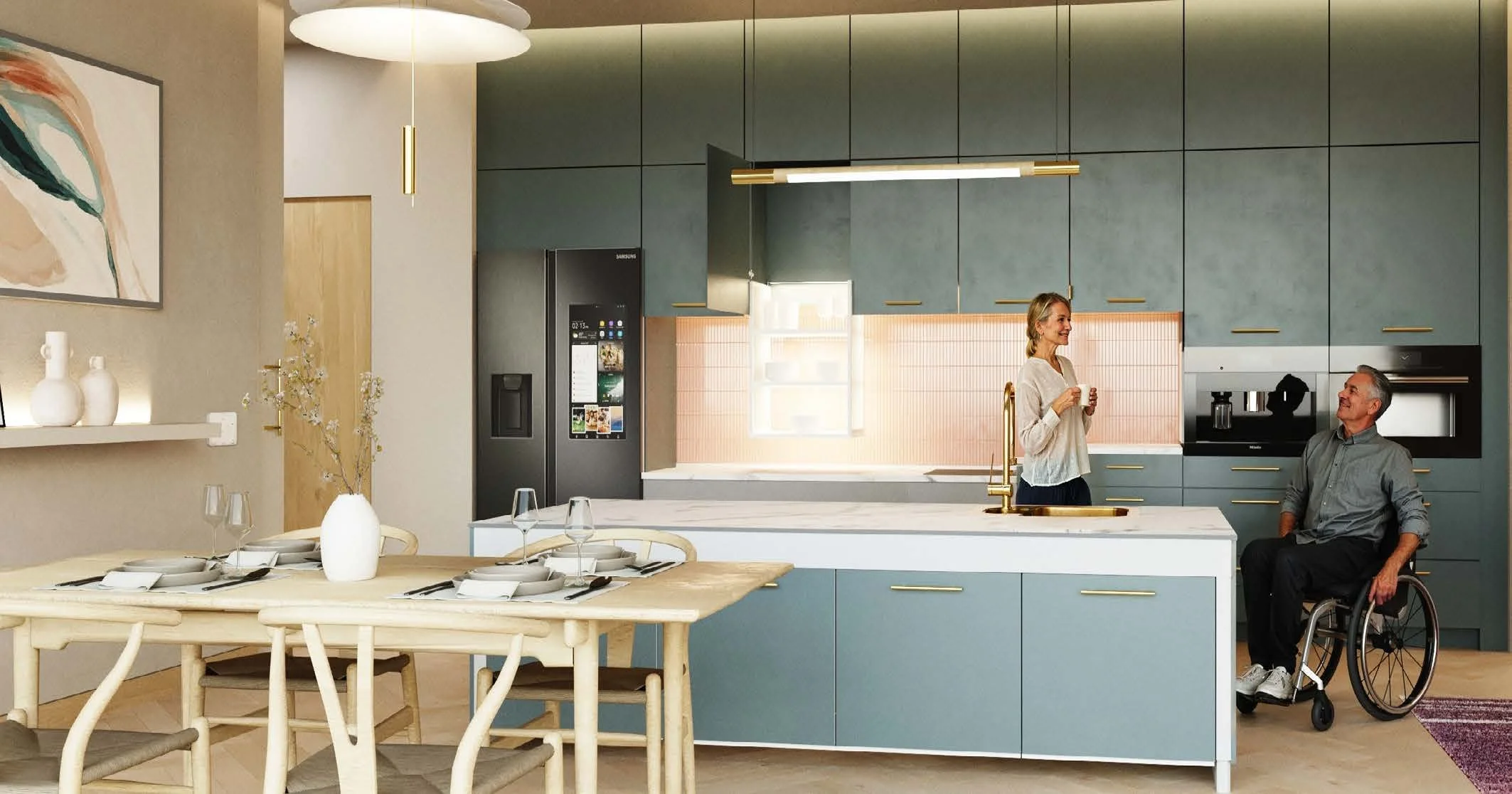
If homes are adapted for independent living with thoughtful interventions and technology, it will help more people stay in the homes they love for longer. Wheelchair accessible kitchen design by Himmelzimmer
The future of ageing will depend on combining thoughtful design, personalised care and supportive technology in a way that protects independence rather than replacing it.
Vicky elaborated:
"Society keeps trying to solve ageing with equipment alone, when most people are ultimately trying to preserve something much more personal: a sense of self, belonging and home."
Creating homes for ageing in place requires collaboration between architects, care providers, families and homeowners. When thoughtful design is combined with compassionate care, people have a greater opportunity to remain in the environments they know and love.
Independent living is not simply about staying in a building. It is about staying connected to a life.
With thanks to Vicky Haines, MD of Kingsway Care for collaborating on this article. Kingsway Care is the leading independent home care provider in Brighton & Hove supporting older adults to age in place. Please feel free to learn more about Kingsway Care here at kingswaycare.com.